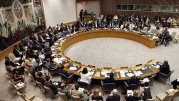
 As Eleanor Roosevelt remarked, respect for human rights begins at home.' Photo: Reuters As Eleanor Roosevelt remarked, respect for human rights begins at home.' Photo: Reuters
|
 Australia should use its UN position to make human rights core business Australia should use its UN position to make human rights core business
AUSTRALIA should commit to using its seat on the United Nations Security Council to promote and protect human rights around the world, given that respect for human rights is essential to the Security Council's mandate of promoting international peace and security.
While the Australian government deserves to be warmly congratulated on its successful campaign, the real value of the $25 million invested in the candidacy will be determined by whether Australia can focus the council's attention more sharply on global human rights issues and situations of concern.
As a member of the Security Council, Australia should take a principled and persistent approach to human rights. This needs to be underpinned by a comprehensive human rights policy, something the government has so far failed to develop.
A comprehensive policy, similar to those developed by the Netherlands and Sweden, could mainstream human rights across all areas of Australian foreign affairs and, like those countries, capitalise on the diplomatic benefits of doing so. It could identify areas in which Australia is well placed to make a distinctive international contribution, such as in business and human rights, the empowerment of women and girls, and combating discrimination on the grounds of sexual orientation or gender identity.
Advertisement
As a member of the Security Council, Australia should also commit to the principles of human rights universality and non-selectivity. As a regional leader, we should be at least as active in promoting human rights and accountability for violations in Sri Lanka and West Papua as we are in Libya and Syria.
There are several practical steps that Australia could take to ensure that human rights are given priority on the council's agenda. These include requesting regular briefings from international human rights experts - such as the UN High Commissioner for Human Rights, UN treaty bodies and the UN Human Rights Council's independent experts - and requesting the inclusion of human rights analyses and impact assessments in all reports prepared for the Security Council. There is good precedent for such an approach. In 2009, Sweden committed its terms as President of the European Council of Ministers to the ''prioritisation and promotion of human rights''.
With our seat on the Security Council now secure, it is also imperative that Australia strengthen the human rights expertise and capacity of our foreign service. We could start by increasing the number of human rights officers in the Department of Foreign Affairs and Trade and incorporating human rights modules in all DFAT training.
The government should also consider establishing a UN Human Rights Advisory Group, comprising experts from non-governmental organisations, academia and human rights bodies, to provide external advice on issues on the Security Council agenda and options for tackling human rights problems. British Foreign Secretary William Hague established just such a group in 2010 and said recently that its ''expertise has proved invaluable in informing our human rights policies''. According to Hague, it is critical for governments to ''hear from experts at the forefront of reporting and documenting human rights abuses''.
Of course, as Eleanor Roosevelt famously remarked, respect for human rights begins at home. Understanding this will be critical to the impact of Australia's efforts on the Security Council, as our commitment to human rights at home is inextricably linked with our capacity and ability to promote human rights abroad.
In order for Australia to adopt not only a principled and consistent, but also effective, approach to human rights in international affairs - from the death penalty, to child labour, to people trafficking - human rights must become core business in internal affairs.
Australia's approach to refugees and asylum seekers - together with the continuing dispossession, disempowerment and disadvantage experienced by many
Aboriginal and Torres Island peoples - undermines our authority and legitimacy on international human rights issues and in multilateral human rights dialogues. We should heed the words of US Secretary of State Hillary Clinton, who has remarked that, ''By holding ourselves accountable, we reinforce our moral authority to demand that all governments adhere to obligations under international law.''
The government's UN Security Council pitch marketed Australia as a ''principled advocate of human rights for all'' and as a country that ''does what it says''. It's time to walk the talk.
(2012-10-20/watoday)
|

 首頁
首頁  聯絡我們
聯絡我們