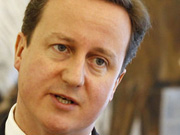
David Cameron has said that giving prisoners the vote makes him feel “sick"
|
 UK BID TO OVERTURN PRISON VOTES RULING UK BID TO OVERTURN PRISON VOTES RULING
By Alison Little
A BID to overturn a ruling by meddling European judges on the issue of votes for prisoners was finally launched by the Government last night.
It follows criticism by the Daily Express of a European Court of Human Rights case that could allow dangerous and violent criminals to vote in UK elections.
Ministers have asked the court to refer a case against Britain’s ban on votes for prisoners, brought by a convicted rapist, to its highest tier, the Grand Chamber.
The move is, in effect, an appeal against the European court’s ruling that it is unlawful for Britain to deny the vote to all prisoners.
It follows MPs’ overwhelming stance against a proposal to grant the vote to inmates serving four years or less.
Prime Minister David Cameron has said that giving prisoners the vote makes him feel “sick”.
But ministers feared continuing the ban would result in having to pay millions of pounds in compensation to serving and former convicts, who complained that denying them the vote breached their human rights. However, recently leaked legal advice given to Deputy Prime Minister Nick Clegg suggested it was possible that the UK could defy the court and keep the ban without serious punishment if it could show it had tried to lift it but that Britain’s international standing would suffer.
The Government will now argue that the court should take account of last month’s Commons vote, even though it was not binding on the Government.
Cabinet Office minister Mark Harper told MPs in a written Parliamentary answer that he wanted the Grand Chamber to reconsider the ruling and to re-examine the principles on which the case was based.
The Strasbourg-based court’s demand followed a successful legal action by convicted axe killer John Hirst.
The former prisoner, who served 15 years for killing his landlady, successfully claimed his human rights had been breached by being denied the vote when he was in jail.
More than 1,500 other similar claims by prisoners are thought to be outstanding. Mr Harper said: “The basis of the Government’s referral request is that we believe the court should look again at the principles in ‘Hirst’, which outlaws a blanket ban on prisoners voting, particularly given the recent debate in the House of Commons."
A panel of five European judges will decide if the referral of the case to its Grand Chamber should be allowed to go ahead.
Ministers hope that decision will be made soon.
The Government had said it was considering its next step after the emphatic 234 to 22 vote in the Commons to keep Britain’s 140-year-old ban on giving prisoners the vote.
The European Court of Human Rights is not part of the EU but is linked because all EU states must be signed up to it.
Mr Cameron has been repeatedly urged by his MPs to show he is ready to stand up to the court’s attempts to impose its policies on the UK.
Some other countries covered by the court’s jurisdiction impose very severe restrictions on prisoners’ voting rights, up to and including life-long bans for certain sentences.
In his written answer, Mr Harper said the Government had requested the referral in the case of two prisoners, named as Robert Greens and MT, who were awarded 5,000 euros (£4,245) in costs and expenses for their loss of voting rights last November.
The judgment noted that the two prisoners remained unable to vote because of the UK’s failure to act on the ruling in the case of Hirst five years ago.
Mr Harper added: “If the Grand Chamber agrees to the referral, they will look again at the judgment and issue their opinion.’’
As well as asking the court to reconsider the principles in the Hirst case, “the request also points out the need for clarity in the ECHR’s case law in this area”.
The Commons vote rejecting change was triggered by the cross-party duo of Labour former Home and Justice Secretary Jack Straw and Tory former Shadow Home Secretary David Davis.
(2011-3-3/express.co.uk)
|


 首頁
首頁  聯絡我們
聯絡我們