Charles Tasnadi
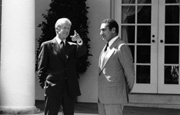
FILE - In a Sept. 17, 1979 file photo, Egyptian Vice President Hosni Mubarak meets with President Jimmy Carter in the Rose Garden of the White House in Washington. Egypt's vice president says Mubarak resigned on Friday, Feb. 11, 2011 as president and handed control to the military. (AP Photo/Charles Tasnadi, File)
|
 Commentary: Jimmy Carter was right about human rights Commentary: Jimmy Carter was right about human rights
Charles E. Richardson
The Macon Telegraph
Jan. 20, 1977, President Jimmy Carter, during his inaugural address, said these words: “Our commitment to human rights must be absolute.”
As you remember, Carter was roundly criticized for that foreign policy. He was called a meddler. He was told that what other regimes did to their people was none of our business.
At the Notre Dame commencement address in July of the same year, Carter said, “We have reaffirmed America’s commitment to human rights as a fundamental tenet of our foreign policy. In ancestry, religion, color, place of origin and cultural background, we Americans are as diverse a nation as the world has even seen. No common mystique of blood or soil unites us. What draws us together, perhaps more than anything else, is a belief in human freedom. We want the world to know that our nation stands for more than financial prosperity.”
But do we? Are we afraid of people -- other than ourselves -- having the power to determine their own destinies?
After listening to some of the voices after Tunisia and Egypt erupted, I would have to say some Americans are afraid. We should be ashamed. And we were not alone in thinking a friendly dictator was preferred over freedom.
The only real democracy in the Middle East, Israel, seeking its own stability, was firmly on the wrong side of history by urging us to side with Hosni Mubarak. The people’s wishes be damned. They should be ashamed, too.
In the Egyptian uprising, we were forced to concede we had propped up a dictator who took the lives of his own people because it was expedient. What kind of message is that from the “Home of the Brave and Land of the Free.”
What I don’t quite comprehend is our blindness. This was not our first rodeo. We have backed enemies of freedom before, and it didn’t turn out well. The Shah of Iran and Iraq’s Saddam Hussein come to mind. Did we care about the people stuck in the middle of the conflicts we’ve sponsored?
Have we learned any lessons? Now we are more worried about instability in Libya, Yemen, Bahrain and Iran, and what that will do to oil prices and how that will impact what we pay at the gasoline pump.
Are we truly committed to freedom? And are we willing to admit that the 39th president of the United States was right? Are we willing to concede that the old peanut farmer, for all his failings, was ahead of his time, and if we had kept the focus on human rights we might not be facing the conundrum of preserving our freedoms while helping dictators deny those same freedoms?
Carter said, “For too many years, we’ve been willing to adopt the flawed and erroneous principles and tactics of our adversaries, sometimes abandoning our own values for theirs.
“Our policy is based on an historical vision of America’s role. Our policy is derived from a larger view of global change. Our policy is rooted in our moral values, which never change.”
Can we look at the world’s panorama with the upheaval in the Middle East and be proud of our role and on which side of history we have landed?
Democracy isn’t pretty. Our own historical experience of almost 235 years should provide an example. We have undergone and are undergoing constant change. Can we expect no less from these emerging democracies? Will some be less than what we would like? Certainly, but we should always come down on the side of people deciding for themselves rather than repressing them for our own purposes.
Our Pledge of Allegiance ends, “With freedom and justice for all.” Did we mean just us?
ABOUT THE WRITER
Charles E. Richardson is The Macon Telegraph’s editorial page editor. He can be reached via e-mail at crichardson@macon.com.
(2011-3-3/kansascity.com)
|


 首頁
首頁  聯絡我們
聯絡我們